Home Buyers Plan repayment relief — The Home Buyers’ Plan five-year repayment grace period is extended to 2028
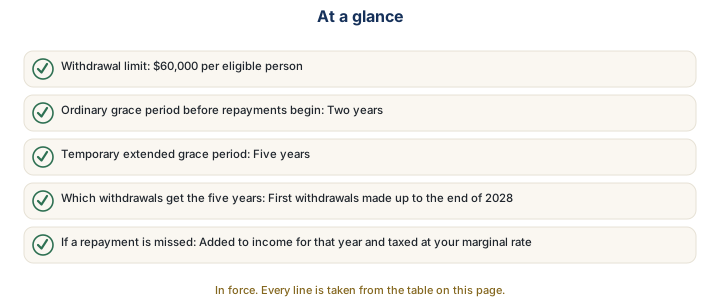
Quick answer: The Home Buyers’ Plan withdrawal limit is $60,000 per eligible person. The temporary five-year grace period before repayments begin — which would otherwise have reverted to two years after 31 December 2025 — now covers first withdrawals made up to the end of 2028.
Withdrawal limit and repayment dates
| Figure | Current |
|---|---|
| Withdrawal limit | $60,000 per eligible person |
| Ordinary grace period before repayments begin | Two years |
| Temporary extended grace period | Five years |
| Which withdrawals get the five years | First withdrawals made up to the end of 2028 |
| If a repayment is missed | Added to income for that year and taxed at your marginal rate |
Which grace period applies is decided by the year of the first withdrawal, so that is the date to check rather than the current year.
How it works
The Home Buyers’ Plan lets a first-time buyer take money out of an RRSP to put toward a home without paying tax on the withdrawal. The limit is $60,000 per eligible person.
It is a loan from yourself rather than a windfall. The money has to go back into the RRSP over time, and repayments are made in annual instalments.
The ordinary grace period before repayments begin is two years. A temporary measure extended it to five, and that extension was due to lapse after 31 December 2025.
It now covers first withdrawals made up to the end of 2028. The relief is to cash flow in the years right after a purchase, which is when money is tightest.
How it applies to you
First-time buyers using RRSP funds toward a home purchase. Because the limit is per eligible person, a couple who both qualify and both have RRSP savings can withdraw considerably more between them.
The grace period is worth understanding precisely, because which one applies depends on the year of your first withdrawal rather than on the year you are in now.
Five years of no repayments is a genuine easing in the period when a new owner is absorbing a mortgage, property tax and everything else that arrives with a house.
How to calculate it
How the plan runs:
| Step | Detail |
|---|---|
| Withdraw from your RRSP | up to $60,000 per eligible person, tax-free at the time |
| Grace period before repayments begin | five years, for first withdrawals through the end of 2028 |
| Repay in annual instalments | back into your RRSP |
| Miss an instalment | that amount is added to your income for the year |
A missed repayment is not carried forward or forgiven — it is included in your income for that year and taxed at your marginal rate. That is the mechanism worth remembering, because it turns a cash-flow problem into a tax bill.
What changed
The ordinary grace period is two years. A temporary measure extended it to five, and that extension was due to lapse; it now runs for first withdrawals through 2028. The relief is to cash flow in the years right after a purchase, which is when it is tightest.
What to do
Track the repayment schedule. The consequence of missing an instalment is immediate and lands in the same year, which makes it easy to be caught out by.
Know which grace period applies to your withdrawal year. This is the part people get wrong — the answer depends on when the first withdrawal was made, not on the current year.
Five years of grace is not five years of forgiveness. The money still has to go back, and it is worth planning for the year the instalments begin rather than meeting them by surprise.
The practical point. A missed HBP repayment is added to your income for that year rather than carried forward, so the schedule is worth tracking. Knowing which grace period applies to your withdrawal year is the part people get wrong.
The terms used on this page
- Home Buyers’ Plan
- A programme allowing a tax-free RRSP withdrawal toward a first home, repaid over time.
- Grace period
- The time after the withdrawal before repayments must begin.
- Instalment
- One of the annual repayments back into the RRSP.
Common questions about home Buyers Plan repayment relief
How long before I have to start repaying?+
What happens if I miss a repayment?+
Which grace period applies to me?+
Why was the period extended?+
Where this comes from
Every figure on this page is taken from the source below, not from interpretation:
General information, not tax advice. This page explains a change in general terms. It cannot account for your circumstances and does not create a professional relationship. Confirm anything that affects a decision — book a free consult.
Have a question about this?
A one-off Advice Call is a paid 45-minute session with a Chartered Professional Accountant — $200 plus GST, booked by email or phone with a secure payment link, credited against your first invoice if you become a client within 60 days. Looking for an accountant to take this on rather than an answer? The first consultation is free.
“Sunny and his team have been completing my bookkeeping, taxes and financials for the last 2 years and they have been amazing. Thank you!”