Tax brackets 2026: the federal and BC bands — and BC raises its lowest rate
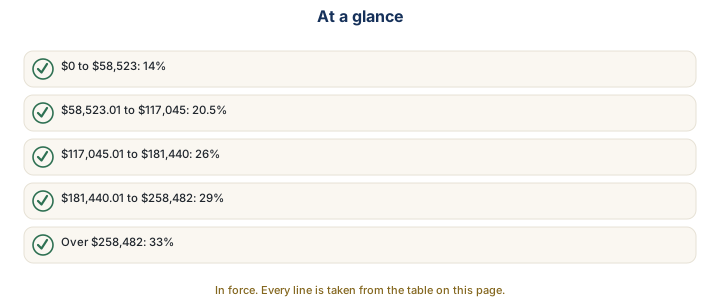
Quick answer: Federal tax for 2026 runs in five bands from 14% to 33%, starting at $58,523. British Columbia raised its lowest rate from 5.06% to 5.6% partway through the year, which is why BC payroll withholding switched to a prorated 6.14% from the first July pay run.
The 2026 federal tax brackets
| Figure | 2026 |
|---|---|
| $0 to $58,523 | 14% |
| $58,523.01 to $117,045 | 20.5% |
| $117,045.01 to $181,440 | 26% |
| $181,440.01 to $258,482 | 29% |
| Over $258,482 | 33% |
Each rate applies only to the portion of income inside its band. Earning a dollar over $58,523 does not tax the whole income at 20.5% — it taxes that dollar at 20.5%. This is the single most common misunderstanding about brackets, and it is why a raise never leaves anyone worse off.
How it works
Canadian personal tax is charged in bands. Federal tax for 2026 begins at 14% on the first $58,523 of taxable income and rises through 20.5%, 26% and 29% to 33% above $258,482.
Provincial tax is charged separately, on its own brackets, and added to the federal amount. British Columbia runs seven bands for 2026, from 5.6% on the first $50,363 up to 20.5% above $265,545.
The BC bottom rate is the figure that changed. On 17 February 2026 the province announced an increase from 5.06% to 5.6%, applying to 2026 and later years. The BC basic reduction rose at the same time, from $562 to $690.
Because it arrived mid-year, employers had already been withholding at the old rate since January. The CRA’s answer was a prorated 6.14% on the lowest band for the rest of the year, starting with the first July payroll, so that the full year lands in the right place.
How it applies to you
Everyone filing a Canadian return, and, more urgently, every BC employer running payroll.
For an incorporated owner the federal bands are what set the marginal cost of taking another dollar of salary, and therefore sit underneath every salary-versus-dividend calculation.
For a BC employer the live issue is narrower and more immediate: whether the payroll software actually switched to the July tables. Withholding at 5.6% rather than the prorated 6.14% for the second half of the year is not fatal, but it leaves employees short at filing time.
How to calculate it
The BC brackets for 2026, and what withholding uses from July:
| Step | Detail |
|---|---|
| $0 to $50,363 | 5.6% — withheld at a prorated 6.14% from July |
| $50,363.01 to $100,728 | 7.7% |
| $100,728.01 to $115,648 | 10.5% |
| $115,648.01 to $140,430 | 12.29% |
| $140,430.01 to $190,405 | 14.7% |
| $190,405.01 to $265,545 | 16.8% |
| Over $265,545 | 20.5% |
Only the lowest band is prorated, and only for withholding. The annual BC rate for 2026 is 5.6%; the 6.14% exists purely to make up six months of under-withholding before the year closes. The CRA’s July guide notes that, at the time it was published, some of these announced changes were not yet law, so confirm the position before relying on it for anything unusual.
What changed
The BC increase was announced on 17 February 2026 and applies to the whole 2026 tax year. Because employers had already withheld at the old rate for six months, the CRA set a prorated 6.14% for the remaining six months so the year comes out right. The BC basic reduction also rose, from $562 to $690.
What to do
If you run BC payroll, check that the July tables were applied. This is a mid-year change that produces no error message and shows up only when the T4s are compared to what people actually owe.
If you are planning compensation, use the federal bands above for the marginal cost of salary, and remember provincial tax stacks on top rather than replacing it.
Do not read a bracket as applying to your whole income. Only the slice inside the band is taxed at that rate.
The practical point. If you run BC payroll, confirm your software picked up the July change. Withholding at the old rate for the second half of the year leaves employees short at filing time, and it is the kind of error nobody notices until the T4s go out.
The terms used on this page
- Marginal rate
- The rate applying to the next dollar earned, not to all income.
- Taxable income
- Income after deductions, which is what the brackets are applied to, not gross pay.
- Prorated rate
- A temporary withholding rate used to correct part of a year at the old rate, so the annual total comes out right.
- BC tax reduction
- A British Columbia credit that lowers tax for lower-income filers; its basic amount rose from $562 to $690 for 2026.
- Bracket creep
- The effect of inflation pushing income into higher bands, which indexing the brackets is designed to offset.
Common questions about tax brackets 2026: the federal and BC bands
What are the federal tax brackets for 2026?+
Did BC change its tax rate?+
Why is BC payroll withholding at 6.14%?+
If I move into a higher bracket, is all my income taxed at that rate?+
Do I add the federal and provincial rates together?+
Where this comes from
Every figure on this page is taken from the source below, not from interpretation:
- CRA — Current year tax rates and income brackets (2026)
- CRA — T4032BC payroll deductions tables, July 2026, general information
General information, not tax advice. This page explains a change in general terms. It cannot account for your circumstances and does not create a professional relationship. Confirm anything that affects a decision — book a free consult.
Have a question about this?
Ask it free through the quick-question form and a CPA replies by email within one business day. For something that needs a proper look, a one-off Advice Call is a paid 45-minute session with a Chartered Professional Accountant: $200 plus GST, booked by email or phone with a secure payment link. It is credited against your first invoice if you become a client within 60 days. Looking for an accountant to take this on rather than an answer? The first consultation is free.
Brackets decide the rate; what falls into each one is decided months earlier, and a personal return prepared against them is where that is worked out.
“Highly recommend working with Sunny. We switched to him last year for both our personal and small-business taxes — responsive, knowledgeable and quick.”