CRA automatic tax filing — The CRA can file a return on behalf of some lower-income individuals
Quick answer: The CRA has discretionary authority to file a tax return on behalf of eligible lower-income individuals who have not filed, so that benefits tied to filing are not lost.
How it works
A large number of benefits depend on a tax return being filed — the Canada Child Benefit, the GST/HST credit, and various provincial supplements among them. No return means no benefit, even for someone clearly entitled to it.
That catches people who owe no tax and see no reason to file. They lose money by not doing paperwork that would have produced a refund rather than a bill.
The CRA now has discretionary authority to file a return on behalf of eligible lower-income individuals who have not filed, so that benefits tied to filing are not lost.
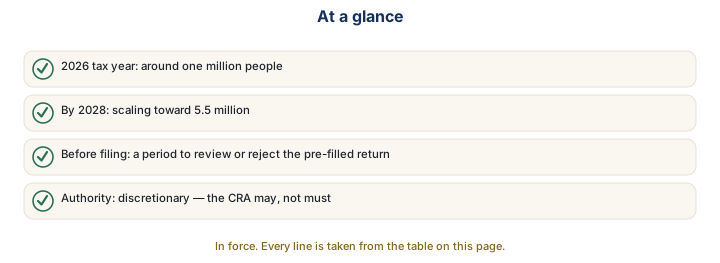
The rollout is phased: around one million people for the 2026 tax year, scaling toward 5.5 million by 2028. There is a period to review or reject the pre-filled return before it is filed.
How it applies to you
Lower-income individuals with simple tax situations who have not been filing. It is aimed squarely at the group losing benefits through inaction.
The authority is discretionary — the CRA may do this, not must. Nobody should treat it as a guarantee that a return will appear.
The review-or-reject window matters. A pre-filled return is a proposal, and a person who disagrees with it can say so before it becomes their filed return.
How to calculate it
The phased rollout:
| Step | Detail |
|---|---|
| 2026 tax year | around one million people |
| By 2028 | scaling toward 5.5 million |
| Before filing | a period to review or reject the pre-filled return |
| Authority | discretionary — the CRA may, not must |
A CRA-prepared return is built from the slips the CRA holds — T4s, T5s and similar. Anything it cannot see will not be on it: medical expenses, donations, tuition, or a deduction that depends on records only you have.
What changed
Many benefits — the Canada Child Benefit, the GST/HST credit, provincial supplements — depend on a return being filed. This addresses the group who lose benefits purely by not filing. The rollout is phased: around one million people for the 2026 tax year, scaling toward 5.5 million by 2028, with a period to review or reject the pre-filled return before it is filed.
What to do
This is a backstop, not a substitute for filing. Anyone with deductions or credits worth claiming is better off filing themselves, because a return built from slips alone will miss them.
If a pre-filled return arrives, read it before the window closes. It is easier to correct a proposal than to amend a filed return.
The genuinely good news is for people who have not filed for years and are owed benefits. If that describes someone you know, filing — or letting this process file — recovers money that is already theirs.
The practical point. This is a backstop, not a substitute for filing. A CRA-prepared return works from the slips it holds, so deductions and credits it cannot see will not appear on it.
The terms used on this page
- Pre-filled return
- A return the CRA prepares from the information it already holds, for you to review.
- Discretionary authority
- The CRA may do this. It is not obliged to, and nobody should rely on it.
- Benefit entitlement
- Payments such as the Canada Child Benefit or GST/HST credit, which require a filed return.
Common questions about CRA automatic tax filing
Will the CRA file my return for me?+
Can I check it before it is filed?+
Should I stop filing my own return?+
What would be missing from a CRA-prepared return?+
Where this comes from
Every figure on this page is taken from the source below, not from interpretation:
General information, not tax advice. This page explains a change in general terms. It cannot account for your circumstances and does not create a professional relationship. Confirm anything that affects a decision — book a free consult.
Have a question about this?
A one-off Advice Call is a paid 45-minute session with a Chartered Professional Accountant — $200 plus GST, booked by email or phone with a secure payment link, credited against your first invoice if you become a client within 60 days. Looking for an accountant to take this on rather than an answer? The first consultation is free.
Automatic filing is built for simple situations; anything with a business, a rental or a corporation still needs a return prepared by a person.
“Highly recommend working with Sunny. We switched to him last year for both our personal and small-business taxes — responsive, knowledgeable and quick.”