Immediate expensing of M&P buildings — Manufacturing and processing buildings can be written off in full in year one
Quick answer: Eligible manufacturing or processing buildings qualify for a 100% first-year deduction, rather than being depreciated over decades. The full rate applies where the building is first used before 2030, then steps down.
How it works
When a business buys a building it cannot deduct the cost in the year it pays. The cost goes into a capital cost allowance class and is deducted a slice at a time, over decades, through depreciation.
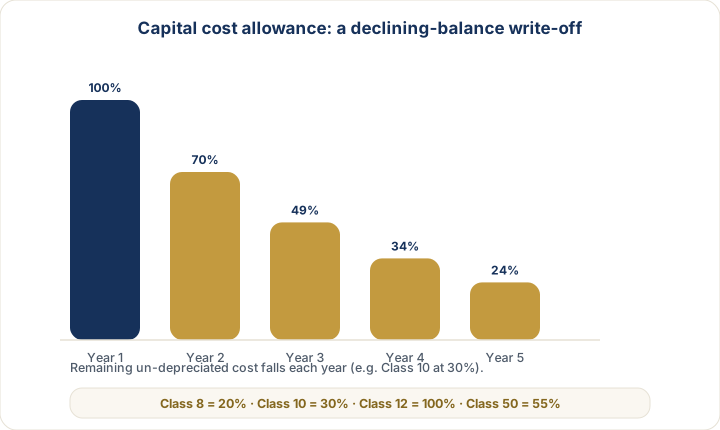
This change lets an eligible manufacturing or processing building be deducted in full in the first year instead — a 100% first-year deduction rather than a long schedule.
The full rate is not permanent. It applies where the building is first used before 2030, then steps down: 75% for 2030 and 2031, 55% for 2032 and 2033, and no enhanced rate after that.
Two conditions matter. At least 90% of the floor space must be used to manufacture or process goods, and the building must be new to the taxpayer. A building bought and used for storage or offices does not qualify, and neither does one you already owned.
How it applies to you
Corporations that manufacture or process goods and are buying, building or expanding premises. It is a genuinely large deduction for a business in that position.
The 90% floor-space test is the one that catches people. A building that is mostly production but with a substantial office or warehouse component can fall below the threshold, and the test is about how the space is used rather than what the company does overall.
Because the deduction lands in a single year, it can push a company into a loss. That is not necessarily a problem — losses can be carried — but it changes the tax picture materially and is worth modelling rather than discovering.
How to calculate it
The deduction depends on when the building is first used:
| Step | Detail |
|---|---|
| First used before 2030 | 100% deducted in the first year |
| First used in 2030 or 2031 | 75% |
| First used in 2032 or 2033 | 55% |
| First used after 2033 | no enhanced rate |
Both dates matter: the property must be acquired on or after 4 November 2025, and the rate depends on when the building is first used. A completion date slipping from December 2029 into January 2030 moves the deduction from 100% to 75% — on a large building, that difference is substantial, and it is decided by a construction schedule rather than a tax decision.
What changed
A building used in manufacturing or processing has historically been a slow write-off. This allows the full cost in the first year, reducing to 75% for 2030 and 2031, 55% for 2032 and 2033, and no enhanced rate after that. At least 90% of the floor space must be used to manufacture or process goods, and the building must be new to the taxpayer.
What to do
If a purchase or a build is in progress, model the timing before committing to a closing or completion date. The rate steps down on calendar boundaries, and a few weeks either side of one changes the deduction.
Confirm the 90% floor-space test with actual measurements rather than an impression of how the building is used.
A deduction this large in a single year interacts with everything else in the return — instalments, the small business deduction, and how the owner draws income. It is worth planning around rather than claiming and seeing what happens.
The practical point. The deduction depends on when the building is acquired and when it is first used, so the timing of a purchase or a completion date can change the deduction materially. It is worth modelling before committing to a closing date.
The terms used on this page
- Capital cost allowance
- The tax system’s version of depreciation: the cost of an asset deducted over time rather than all at once.
- First-year deduction
- The amount deductible in the year the asset is put to use.
- New to the taxpayer
- Not previously owned or used by you. A building you already held does not qualify.
Common questions about immediate expensing of M&P buildings
Can I really write off a building in the first year?+
What has to be true for the building to qualify?+
Does the full write-off last?+
Why does my completion date matter so much?+
Where this comes from
Every figure on this page is taken from the source below, not from interpretation:
General information, not tax advice. This page explains a change in general terms. It cannot account for your circumstances and does not create a professional relationship. Confirm anything that affects a decision — book a free consult.
Have a question about this?
A one-off Advice Call is a paid 45-minute session with a Chartered Professional Accountant — $200 plus GST, booked by email or phone with a secure payment link, credited against your first invoice if you become a client within 60 days. Looking for an accountant to take this on rather than an answer? The first consultation is free.
“Sunny and his team have been completing my bookkeeping, taxes and financials for the last 2 years and they have been amazing. Thank you!”