CRA prescribed interest rates — 7% on overdue tax, 3% on shareholder loans
The prescribed rate decides what an overdue balance costs and what a shareholder loan has to charge. If either is sitting on your books, the year end is where it gets settled.
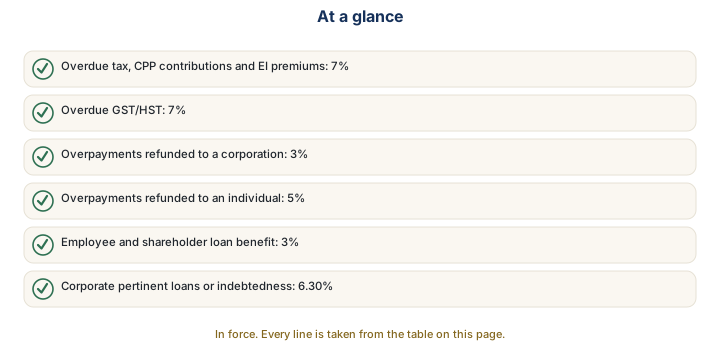
Quick answer: The CRA sets its interest rates every quarter. For 1 October to 31 December 2026 the rate on overdue tax, CPP and EI is 7%, the rate that values a shareholder or employee loan benefit is 3%, and overpayments earn 3% for corporations and 5% for individuals.
The shareholder-loan rate is the one that matters to an owner, and it changes every quarter. Ask what it does to your loan.
The prescribed rates for this quarter
| Figure | 2026 |
|---|---|
| Overdue tax, CPP contributions and EI premiums | 7% |
| Overdue GST/HST | 7% |
| Overpayments refunded to a corporation | 3% |
| Overpayments refunded to an individual | 5% |
| Employee and shareholder loan benefit | 3% |
| Corporate pertinent loans or indebtedness | 6.30% |
The gap between what the CRA charges and what it pays is deliberate and wide: 7% out, 3% or 5% back. Leaving a balance owing is expensive; leaving an overpayment sitting with the CRA is a poor place to keep money.
How it works
The CRA does not use one interest rate. It sets several, and it resets them every calendar quarter under a formula in the legislation rather than by discretion. The figures on this page are the ones in force from 1 October to 31 December 2026.
The rate you meet most often is the one charged on money owed to the CRA — overdue income tax, GST/HST, and unremitted CPP and EI. For this quarter that is 7%, compounded daily, and it is not deductible.
A separate and much lower rate applies in the other direction. If the CRA has held too much of your money it pays 3% to a corporation and 5% to an individual.
Then there is the rate that matters most to an incorporated owner, and it is easy to miss because it is not about a debt to the CRA at all. When a corporation lends money to a shareholder or employee interest-free, or below the prescribed rate, the shortfall is a taxable benefit. For this quarter that benefit is measured at 3%.
How it applies to you
Anyone carrying a balance with the CRA, waiting on a refund, or holding a loan from their own corporation.
For an owner-manager the shareholder loan rate is the live one. Draw $50,000 from the corporation and pay no interest, and a benefit is computed on that balance at the prescribed rate for each quarter it is outstanding, and it is included in income whether or not any cash changed hands.
The benefit disappears if interest is actually paid at or above the prescribed rate. The catch is the deadline: it has to be paid within 30 days of the end of the year — by 30 January, not merely accrued in the accounts.
How to calculate it
A shareholder loan, worked through on this quarter’s rate:
| Step | Detail |
|---|---|
| Loan outstanding from the corporation | $50,000, interest free |
| Prescribed rate for the quarter | 3% |
| Benefit for one quarter | $50,000 × 3% × 3/12 = $375 |
| If outstanding all year at 3% | about $1,500 of taxable benefit |
| Interest actually paid by 30 January | reduces the benefit dollar for dollar |
The rate is applied quarter by quarter, so a loan spanning a rate change is calculated in parts rather than at one average rate. And paying the interest is only effective if it is paid, in cash, within 30 days of the year end, a journal entry accruing it does not count.
What changed
These rates are recalculated quarterly rather than annually, so a figure quoted from an old article is often simply the wrong quarter. The 3% loan rate is the one incorporated owners meet most: it is what turns an interest-free shareholder loan into a taxable benefit.
What to do
If you have an interest-free shareholder loan, decide before year end whether to pay the interest or accept the benefit. Paying it is usually cheaper, but only if it actually leaves your bank account by 30 January.
If you owe the CRA, understand that 7% compounding daily and non-deductible is a worse cost than most commercial credit. Paying the CRA first is often the correct order.
Check the quarter before relying on any figure, including this page. These rates change four times a year, and most articles quoting them do not say which quarter they belong to.
The practical point. If you have drawn a shareholder loan and are paying no interest, the 3% rate is what the benefit is measured at. Paying interest at or above the prescribed rate, by 30 January of the following year, removes the benefit entirely, and that date is the one people miss.
The terms used on this page
- Prescribed rate
- An interest rate set by the CRA under a statutory formula and reset each calendar quarter, rather than negotiated or chosen.
- Shareholder loan benefit
- The taxable amount arising when a corporation lends to a shareholder interest-free or below the prescribed rate.
- Overdue remittance rate
- The interest the taxpayer pays on amounts owed to the CRA.
- Overpaid remittance rate
- The interest the CRA pays on amounts it owes back to the taxpayer.
- Pertinent loan or indebtedness
- A specific election-based category of loan to a foreign affiliate, carrying its own prescribed rate.
Common questions about CRA prescribed interest rates
What is the CRA prescribed interest rate right now?+
How often do these rates change?+
Is the interest the CRA charges deductible?+
Where this comes from
Every figure on this page is taken from the source below, not from interpretation:
- CRA — Interest rates for the fourth calendar quarter of 2026
- CRA — Prescribed interest rates, all quarters
General information, not tax advice. This page explains a change in general terms. It cannot account for your circumstances and does not create a professional relationship. Confirm anything that affects a decision — book a free consult.
Have a question about this?
Ask it free through the quick-question form and a CPA replies by email within one business day. For something that needs a proper look, a one-off Advice Call is a paid 45-minute session with a Chartered Professional Accountant: $200 plus GST, booked by email or phone with a secure payment link. It is credited against your first invoice if you become a client within 60 days. Looking for an accountant to take this on rather than an answer? The first consultation is free.
The rate matters because of what it is applied to — shareholder loans, instalments, prescribed-rate arrangements — and advice on the loans and instalments they price covers those.
“Sunny and his team have been completing my bookkeeping, taxes and financials for the last 2 years and they have been amazing. Thank you!”